Why sound quality separates professional video from amateur footage
Viewers forgive a soft shot long before they forgive a muffled word. How the microphone decisions a professional producer makes decide whether a film is watchable, and what actually changes on location and in the edit.
Published 23 November 2026 · 5 min read
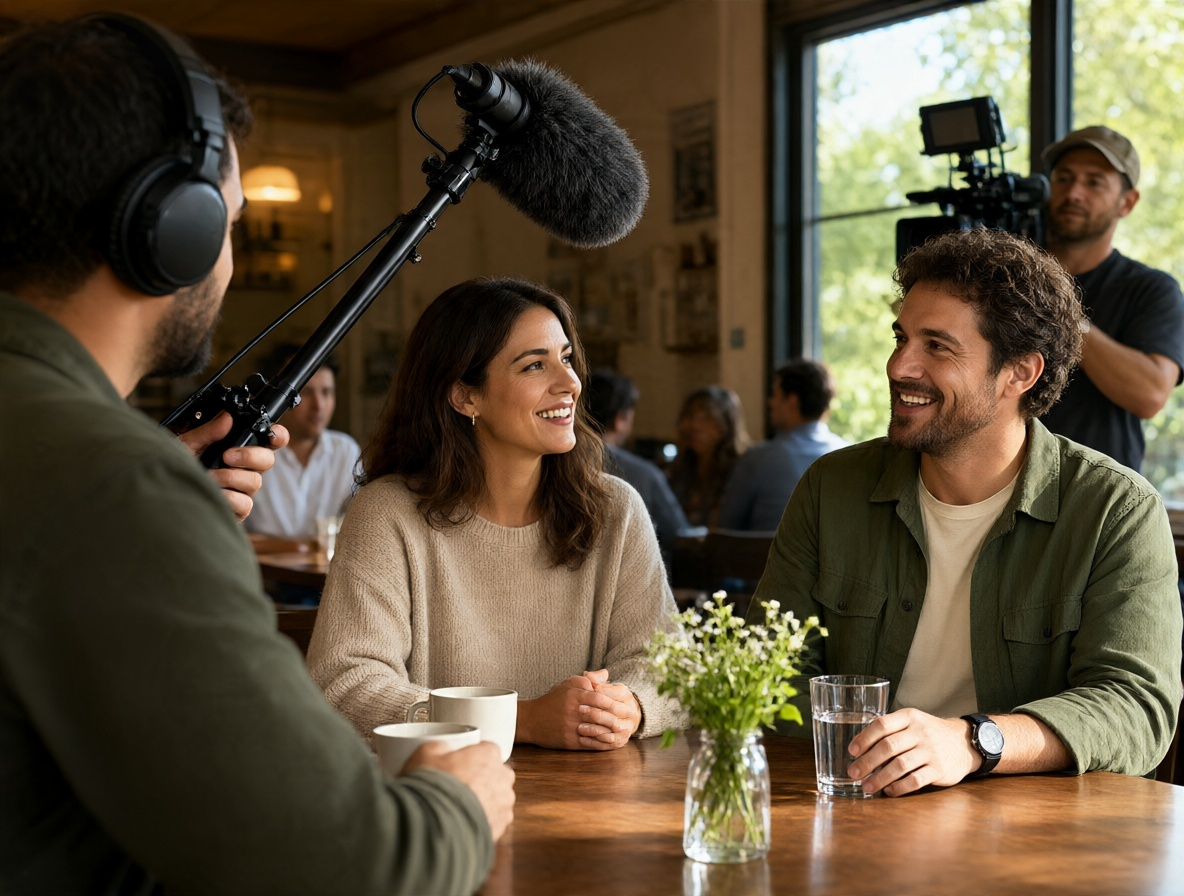
The first thing viewers judge
Ask people what makes a film look professional and most say the camera. Watch them watching and the truth is different: the moment the sound turns hollow, echoey or hard to follow, they stop trusting the film. Subtitles exist because of this. A slightly soft shot reads as style or circumstance, but a voice you have to strain for reads as a mistake, and every claim that follows it inherits the doubt.
Sound is also the least forgiving thing to fix later. A dark shot can be lifted, a shaky one stabilised, a rambling interview tightened. Audio recorded badly, with room echo baked in or a voice clipped by a cheap microphone, cannot truly be repaired, only masked. That asymmetry is why professionals spend on sound first and glamorise the camera later.
What changes on location
The difference begins before anyone presses record. A professional listens to the room: the hum of air handling, the fridge nobody notices, the echo of a glass-walled office. Sometimes the honest answer is to move the interview two metres, or to the corridor, or to another day, because no microphone choice saves a bad room.
Then come the choices amateurs never make. Lavalier microphones hidden on clothing for dialogue, a shotgun microphone from a boom for a more natural tone, both recorded as separate tracks rather than leaning on the camera's own microphone, because camera audio is a convenience, not a tool. Headphones on for the whole take, because you cannot fix a rustle you never heard. A spare recording on a second device, because interviews are unrepeatable and insurance is cheap.
None of this is exotic kit anymore. It is the difference between owning a microphone and using it properly, and that difference is what the audience hears without ever knowing why.
What changes in the edit
In post, sound gets the same craftsmanship the picture gets. Dialogue is cleaned and levelled so no sentence jumps out or disappears. Music is chosen for the film's tone rather than to fill silence, and it ducks under every voice so the words always win. Levels are mixed with a purpose: dialogue sits where streaming platforms expect it, so your film does not blast one moment and murmur the next.
Good sound editing is invisible by design. The viewer never thinks about it, which is exactly why it works: they simply find the film easy to watch, and ease is what professional means.
The honest test
Play any film on a phone speaker with the screen face down. If you can follow every word comfortably, the production took sound seriously. If you reach for the volume button twice, no camera would have saved it.
That is the standard worth holding any producer to, because it is the standard audiences actually apply. If you have a film where the words matter, and they always do, it is worth booking someone who records them properly.