Why great lighting is vital to a professional film
The camera records light, not scenes: why lighting decides whether a film reads as professional, what a producer actually does with light on location, and how to tell good light when you see it.
Published 27 November 2026 · 5 min read
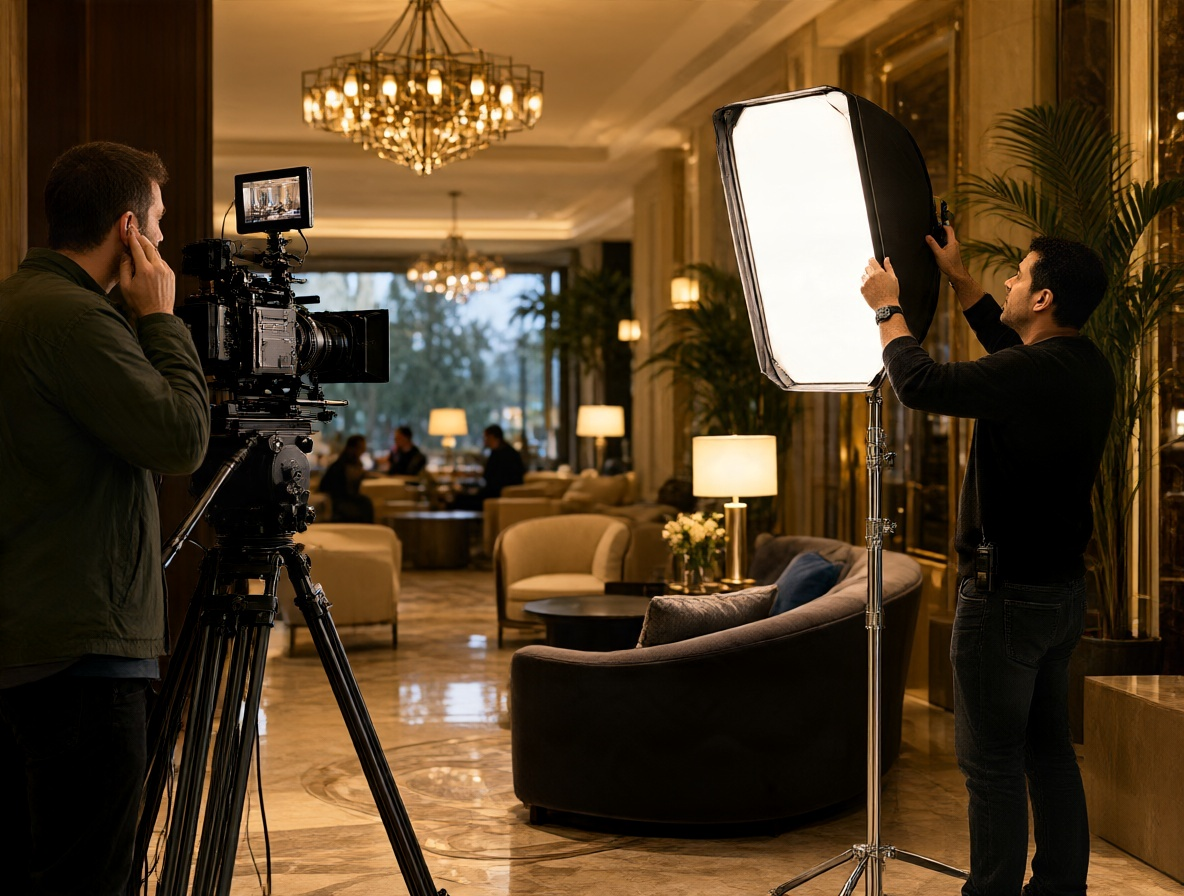
The camera records light, not scenes
Ask why one film looks expensive and the next looks like a phone clip, and the answer is almost never the camera. A camera records whatever light arrives at its sensor and nothing else. The camera body everyone asks about is the last ten percent of the question. The light in front of it is the first ninety.
Viewers judge this instantly, without ever naming it. A face lit softly reads as trustworthy. A room lit evenly reads as cared for. A product lit with shape and shadow reads as worth having. The audience never says the word lighting; they simply decide the film looks professional, and they decide it in the first few seconds.
What a producer actually does with light
On location, professional lighting is mostly decisions rather than equipment. Soften the light on a face so the skin reads well and the eyes catch a little of it. Lift the shadow side so the subject separates from the background instead of dissolving into it. Shape what is already there: window light pushed with a reflector, a practical lamp kept in frame so a room still looks like the room it is.
The rest is discipline. Colour temperature kept consistent, so the film does not drift between blue and orange. Backgrounds tidied or darkened, so nothing competes with the subject. A schedule built around the light rather than against it: exteriors when the sun cooperates, interviews when the window does the work, the golden-hour shot planned rather than hoped for. On a professional shoot the shot list and the lighting plan are the same document.
Why it matters most on the smaller jobs
On a big crew, lighting is a department. On the small, defined jobs most customers actually book, it is the producer holding one fixture and knowing where to point it, and that is exactly where the difference shows. A two-person crew filming a hotel lobby or a holiday let has no second take of the daylight, and nobody on the crew can move the sun.
It is also the honest reason professional films of ordinary places look so good. The room did not change. The light did. That is why the filmed version of a venue looks the way the venue felt the first time you walked into it, while a hurried phone clip of the same room makes the same place look smaller, flatter and colder than it is.
The honest test
Play any film with the sound off and ask three questions. Can you read the subject's eyes? Does the place look somewhere you would want to be? Could you screenshot any frame and use it as a still? Three yeses means somebody lit that film on purpose, and one no usually tells you where the budget went instead.
That is the standard the producers here hold, because it is the standard viewers apply without ever articulating it. If your product, your place or your people deserve to look their best, book someone who thinks about the light before the camera comes out of the bag.